- Sep 3
Getting Kids to KNOW, LOVE & USE Their Bibles
- Karl Bastian from Kidology.org and KarlBastian.club
By Pastor Karl Bastian, the Kidologist – Kidology.org
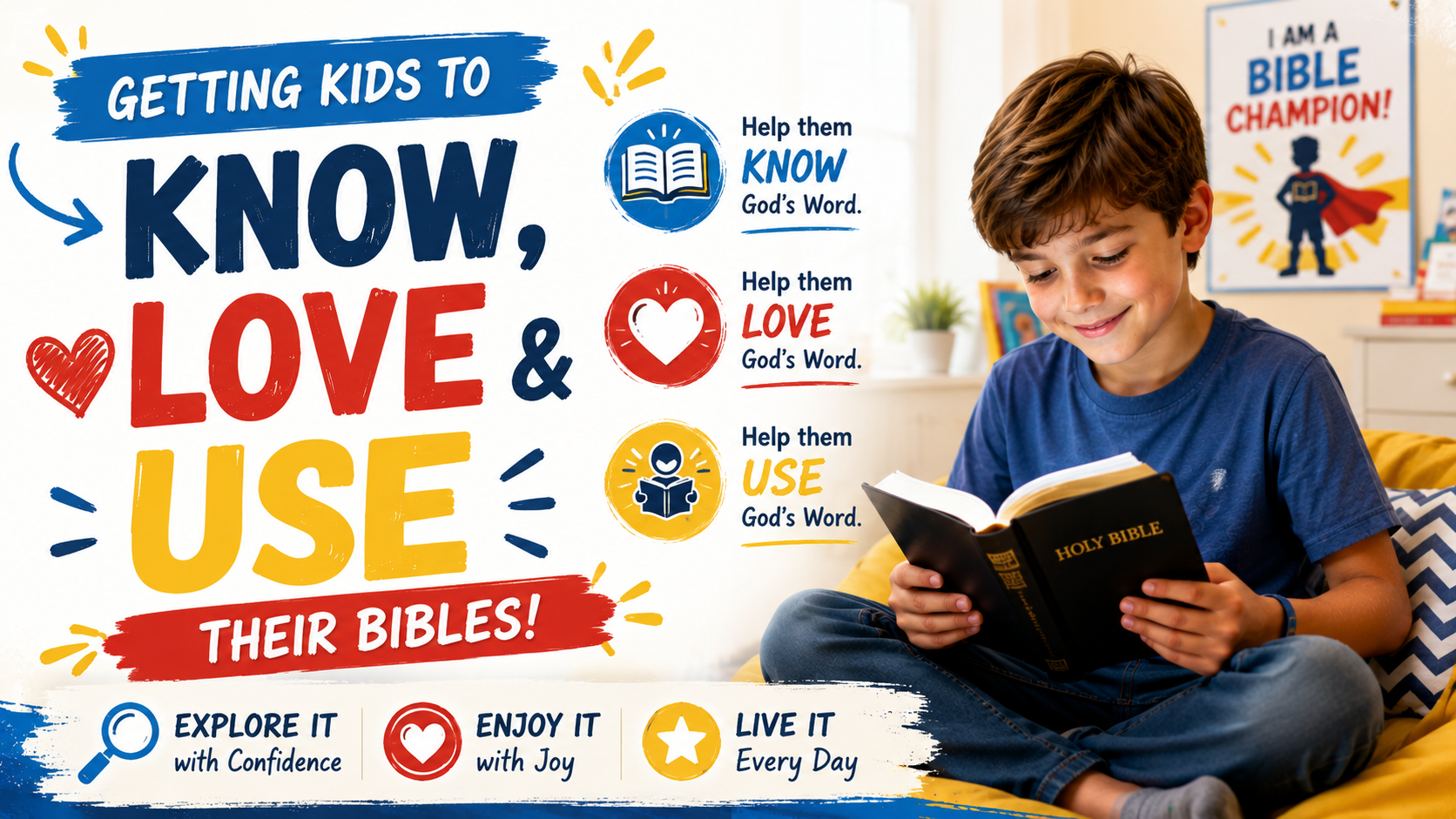
We all want kids to know their Bibles. But there is a big difference between knowing Bible stories and knowing the Bible.
A child can know that David defeated Goliath, Daniel survived the lions’ den, Jonah got swallowed by a giant fish, and Zacchaeus climbed a tree, and still have absolutely no idea where to find any of those stories in the Bible! They may know the stories without really knowing the Book.
Our goal should be bigger than simply teaching kids what the Bible says. We want to help kids become comfortable with the Bible itself — opening it, navigating it, reading it, memorizing it, exploring it, asking questions about it, and eventually discovering its treasures on their own.
We want kids to KNOW it, LOVE it and USE it.
Here are some practical ways we can help make that happen.
1. Get Bibles Into Kids’ Hands
This sounds ridiculously obvious, but look around your kids’ ministry this Sunday. How many kids actually have a Bible in their hands?
Screens are wonderful. I use them constantly. Putting Scripture on the screen helps everyone participate, especially visitors who may not own a Bible. But screens should supplement the Bible, not replace it. If every verse instantly appears on the screen, kids never need to learn where Genesis is. They never discover that Psalms is near the middle. They never notice that there are four Gospels or that Acts comes right after them.
They also miss that wonderfully awkward childhood ritual of flipping desperately through 1 Chronicles while everyone else has somehow already found 1 Corinthians!
That struggle is part of learning.
Encourage kids to bring their own Bible. Celebrate when they do, and keep extra Bibles available for kids who don't have one. Encourage parents to buy their children a Bible that is appropriate for their age and reading level, too. A beautiful leather study Bible may look impressive on a shelf, but if a third grader can't comfortably read it, it won't accomplish much.
I've put together a list of Pastor Karl's Recommended Bibles for Kids to help parents choose one their child will actually enjoy using. You are welcome to edit it, and make it your own!
A Bible kids can understand is a Bible they are much more likely to open.
2. Let Kids See YOU Using the Bible
If you want kids to use their Bibles, let them see you using yours.
When you teach, hold an actual Bible. Open it and read from it. When you say, “Let's see what the Bible says,” actually turn there and show them where you're reading. If you're teaching a Bible story, remind them where that story is found. If you teach from notes – use a half-sheet format so you can stick it in your Bible and refer to it there – visually this says, “What I am saying comes from the Bible.”
We subtly communicate what matters by what we physically use. If our lesson notes are in our hands while the Bible sits untouched on a table, kids notice. I want kids to understand that these aren't simply Pastor Karl's clever ideas or another fun kids' ministry lesson. This is God's Word, and that's why it matters.
And while we're modeling Bible use, let's model Scripture memory too. Whatever Scripture you ask kids to memorize, you should memorize it too! Don't stand there holding the answer card while testing them. Put the card down and learn it with them. Let them test you occasionally. Kids LOVE catching an adult making a mistake anyway, so you might as well put that spiritual gift to good use! Don’t use the excuse that you are old and can’t memorize Scripture. You can. It is only a matter of willingness to put in the time to “hide it in your heart.” (Psalm 119:11)
When children see adults memorizing Scripture, we communicate that Bible memory isn't merely something kids do to earn a prize. God's Word is worth hiding in our hearts at every age.
3. Get Kids LOOKING Things Up
One of my favorite elements in the it Bible Curriculum is something we call a Bible Dash. My generation called them Sword Drills, but perhaps we've wisely retired that terminology. Nothing says “safe children's ministry environment” quite like yelling, “DRAW YOUR SWORDS!” to sixty third graders.
The idea, however, was fantastic.
Give kids a Scripture reference and have them race to find it. At first, some kids will struggle. That's okay! Every time they search for Matthew, Romans, Psalms, Genesis or Philippians, they're slowly developing a mental map of the Bible.
That's why every lesson in it Bible Curriculum intentionally gets kids opening and navigating their Bibles rather than simply reading everything from a screen.
Sometimes the most helpful thing you can do is not put the verse on the screen. Make them find it!
4. Help Kids Learn Their Way Around
One of the greatest gifts you can give a child is helping them memorize the books of the Bible. Once they know those 66 books, this enormous and sometimes intimidating book suddenly becomes much easier to navigate.
Instead of hearing “Habakkuk” and wondering whether that's even in the Bible, they begin thinking, “Old Testament... Minor Prophets... somewhere near the end.” That's a huge step toward biblical confidence.
Use songs, games, challenges, contests and timed races. I've created a Bible Champions Poster specifically to encourage kids to master the Books of the Bible.
Don't make learning the books of the Bible feel like homework. Make it an accomplishment worth celebrating! Once kids know where things are, they become far more confident exploring the Bible for themselves.
5. Turn Bible Learning Into PLAY
Kids learn through play, so let them play with their Bibles!
I've spent years creating games that get kids interacting with Scripture because fun and learning aren't enemies. Often, fun is what opens the door to learning. Bible Baseball lets kids advance around the bases by answering Bible questions. Bible Bowl Football turns Bible knowledge into a football competition. My Bible Bingo Games takes familiar Bible people, places and ideas and puts them into a game kids immediately understand. And Bible Ninja Warriors combines physical challenges with Bible knowledge and navigation.
The kids may think they're simply competing and having fun, but meanwhile they're becoming more familiar with Scripture. Pretty sneaky, huh?
6. Make the Bible Fascinating
The Bible already is fascinating. Think about what's in this Book! There are mysteries, prophecies, kings, battles, miracles, poetry, wisdom, adventure, heroes, villains, shipwrecks, prison escapes, angels, dreams and visions — all wrapped up in the greatest rescue story ever told.
Lean into the adventure and discovery! Series like Bible Boot Camp or Secrets of the Ancient Scrolls help kids explore Scripture with a sense of mystery and excitement. Series such as DiscipleTown: How to Study the Bible, How to Navigate the Old Testament, How to Navigate the New Testament or How to Use My Bible intentionally teach kids how to explore Scripture rather than simply telling them what it says.
After all, our goal isn't merely to give kids biblical information. We want to equip them to discover biblical truth for themselves.
7. Use Collecting and Curiosity
Never underestimate the motivational power of collecting things. Baseball figured this out. Pokémon figured this out. Kids ministry can figure it out too!
The Great Adventure Bible Trading Cards turn Bible characters, events and facts into something kids can collect, trade and explore. 100 Prophecies of Jesus Cards help kids discover the amazing connections between Old Testament prophecy and Jesus. Even fun resources like my 100 Bible Names Trick can take something that initially feels like a stunt and turn it into another opportunity to create curiosity about Scripture.
Not every Bible activity has to teach an entire theological concept. Sometimes a win is simply getting a kid to say, “Whoa! That's cool. Tell me more!” Curiosity is a powerful doorway to learning.
8. Give Kids Something to Work Toward
Kids love challenges, accomplishments and leveling up. That's one reason I recently launched a midweek program at my church called OUTPOST Club.
One of the core components is a Scripture Memory Challenge Field Guide where kids work through increasingly challenging levels of Bible memory. They memorize individual verses, the books of the Bible, key passages like Psalm 23 and other foundational portions of Scripture. There are goals to reach and achievements to celebrate, but the real goal isn't completing a checklist.
The real goal is helping a child develop the conviction that God's Word belongs in my heart.
I'm currently preparing the OUTPOST Scripture Memory Challenge Field Guide to share with other churches, so stay tuned. It's coming soon!
9. Get Parents Involved
Church gets only a tiny fraction of a child's week, which means parents have the greatest opportunity to build lifelong Bible habits. But sometimes we make family Bible time sound so complicated that parents feel defeated before they even begin.
It doesn't need to resemble seminary!
Encourage families to keep Bibles handy, read short passages together, look up verses when questions arise, memorize Scripture together, and most importantly, let their kids see them reading the Bible. Even asking at dinner, “Did you read anything interesting in the Bible this week?” communicates that Scripture is a normal part of everyday life.
Consider providing my Family Table Talkers to your parents. It's a simple tri-folded resource families can put on the kitchen table each month with a short devotional, simple game, discussion questions, and a few Bible verses to look up together at dinner. Help families make meals matter as you equip them to get the Bible open during those increasingly rare times when the entire family gathers around the table.
Five meaningful minutes around an open Bible can have more impact than an ambitious thirty-minute family devotional that everyone dreads. Keep it simple, keep it positive and keep opening the Bible.
10. Remember the REAL Goal
Ultimately, our goal isn't producing kids who can win Bible Jeopardy. Biblical knowledge matters tremendously, but knowledge isn't the finish line.
Jesus said, “If you hold to my teaching, you are really my disciples.” (John 8:31)
We want children who know God's Word because they are learning to know the God who gave it to us. We want them to discover that the Bible isn't merely an ancient collection of stories adults want them to learn. It is God's Word, and it gives them wisdom when they're confused, comfort when they're hurting, correction when they wander, courage when they're afraid and hope when life feels hopeless. Above all, it introduces them to Jesus.
So don't merely teach Bible stories. Put Bibles into kids' hands and teach them how to explore them. Race through them, play with them, memorize them, ask questions about them and discover them together. And through it all, let kids see that you love God's Word too.
Because one of the greatest gifts we can give a child isn't simply teaching them what the Bible says. It's teaching them how to discover what it says for themselves.
Help them KNOW it. LOVE it. And USE it.
My prayer is that someday, long after they've left our children's ministries, they'll still be opening that Book.
Let me know YOUR favorite tool or technique for helping kids to know, love and USE their Bibles!